Vaccine autism myth debunked once and for all
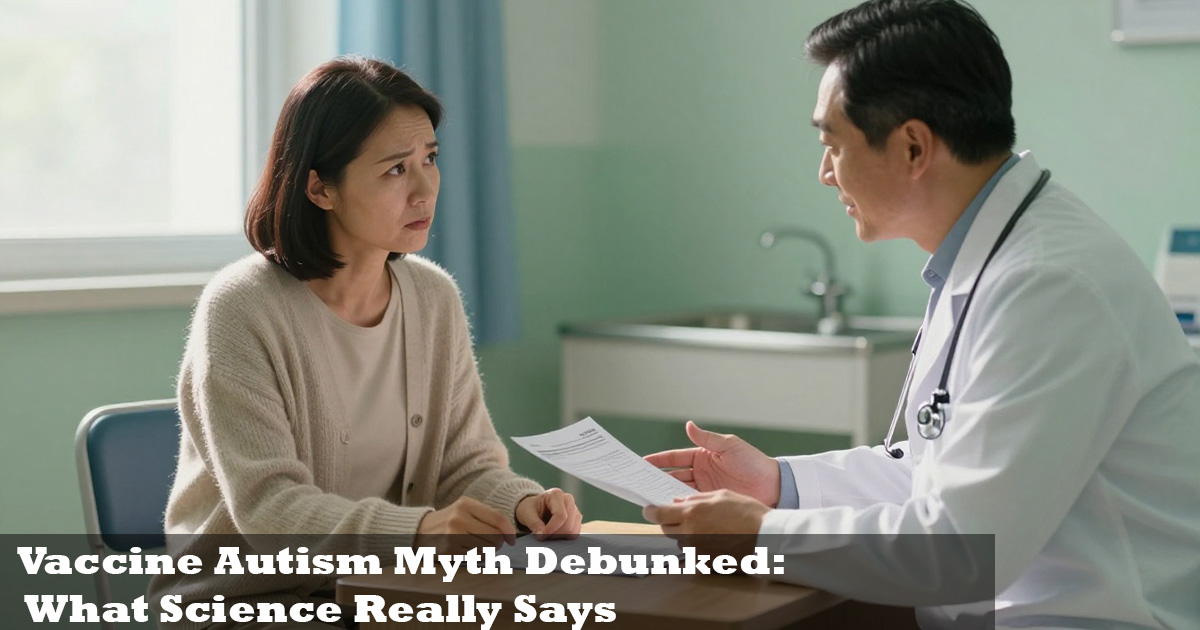
The phrase vaccine autism myth debunked has become one of the most important scientific clarifications in modern public health. Yet despite overwhelming evidence, the myth still circulates online, in clinics, and even in political debates.
Recent controversy around retracted Lancet studies has reopened old wounds. Parents are confused, doctors are frustrated, and misinformation is spreading faster than corrections.
So what’s really going on? Let’s break it down in simple, evidence-based terms.

Vaccine Autism Myth Debunked and Emotional Storytelling
Even though science has repeatedly disproven it, the idea refuses to disappear. The original fear started decades ago with a now-discredited study suggesting a link between vaccines and autism.
The problem is not just science—it’s psychology.
People remember emotional stories more than statistics. A parent noticing developmental changes after vaccination may assume cause and effect, even when timing is purely coincidental.
This is exactly why the phrase vaccine autism myth debunked continues to trend online—because misinformation spreads faster than corrections.
The Lancet Retractions Explained
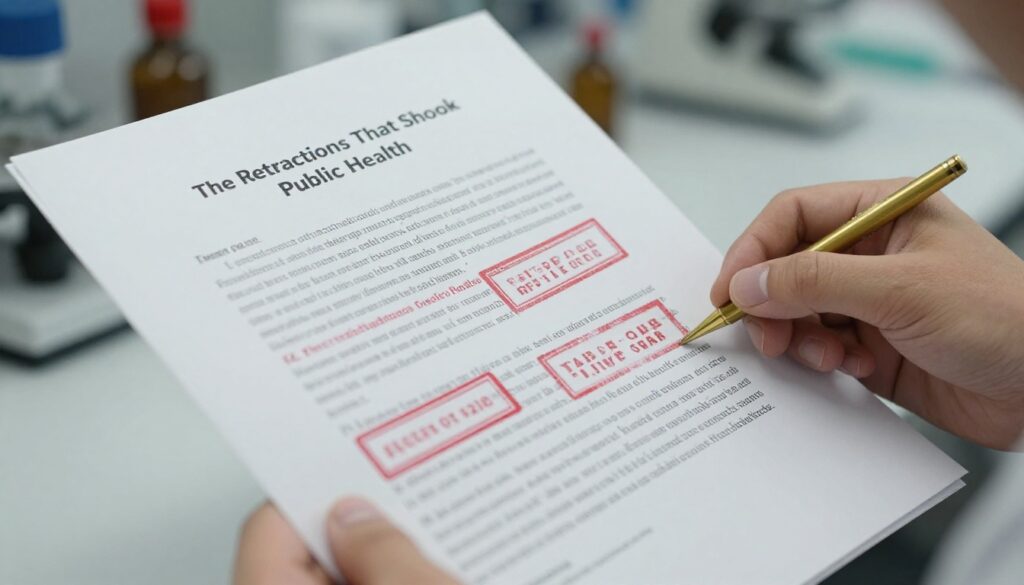
A major reason the topic resurfaced is the recent discussion around retracted Lancet papers.
These studies were once cited in debates about childhood vaccines. However, they were later withdrawn due to serious scientific flaws such as:
- Manipulated or selective data use
- Faulty statistical methods
- Lack of proper peer transparency
- Ethical concerns in research design
The most infamous case traces back to Andrew Wakefield’s 1998 paper, which was fully retracted after evidence of misconduct and conflicts of interest.
These retractions reinforce the vaccine autism myth debunked conclusion: the original claims were not just weak—they were scientifically invalid.
What Science Actually Says
Modern science is extremely clear on this issue.
Large-scale studies involving millions of children across countries like Denmark, Sweden, Finland, and the United States have consistently found:
- No link between vaccines and autism
- No increase in autism risk after vaccination
- No biological mechanism supporting the claim
In fact, autism is now understood to be largely influenced by genetics and early brain development, not vaccines.
This is the strongest evidence supporting the vaccine autism myth debunked conclusion ever reached in medical history.
How Misinformation Spreads So Fast
If the science is settled, why does confusion remain?
The answer lies in how information spreads today.
Social media algorithms prioritize emotional and controversial content. A dramatic story about vaccines gets shared far more than a calm scientific correction.
Common misinformation triggers include:
- Viral personal anecdotes
- Misinterpreted medical timing
- Influencer-driven fear content
- Outdated or retracted studies being recycled
Even when vaccine autism myth debunked articles are published, they struggle to match the reach of viral fear-based posts.
What Parents Should Really Know
Parents are often caught in the middle of this debate, trying to make the best decision for their children.
Here’s what medical experts consistently emphasize:
- Vaccines are rigorously tested for safety
- Immunization schedules are designed by independent experts
- Delaying vaccines increases risk of serious diseases
- Autism symptoms often appear around the same age vaccines are given—but are unrelated
The vaccine autism myth debunked message is not just academic—it directly protects children from preventable diseases like measles and whooping cough.
A key point doctors stress: the immune system handles thousands of antigens daily from food, environment, and bacteria—far more than vaccines contain.
Public Health Risks of Falling Vaccination Rates
When vaccination rates drop, history shows what happens next.
We see:
- Resurgence of measles outbreaks
- Increased hospitalizations in infants
- Higher risk for immunocompromised individuals
- Preventable deaths returning
For example, measles outbreaks in the United States have largely occurred in unvaccinated communities.
This is why the vaccine autism myth debunked message is not just about correcting misinformation—it’s about preventing real-world harm.
Public health systems depend on herd immunity. When trust weakens, the entire community becomes vulnerable.

Vaccine autism myth debunked with overwhelming evidence
The evidence is no longer debated in the scientific community. The conclusion is clear: the vaccine autism myth debunked narrative is supported by decades of high-quality global research.
Retractions of flawed studies only reinforce what science has already established—vaccines do not cause autism.
What remains now is a communication challenge, not a scientific one. Helping parents access clear, trustworthy information is the key to rebuilding confidence and protecting public health.
About the Author