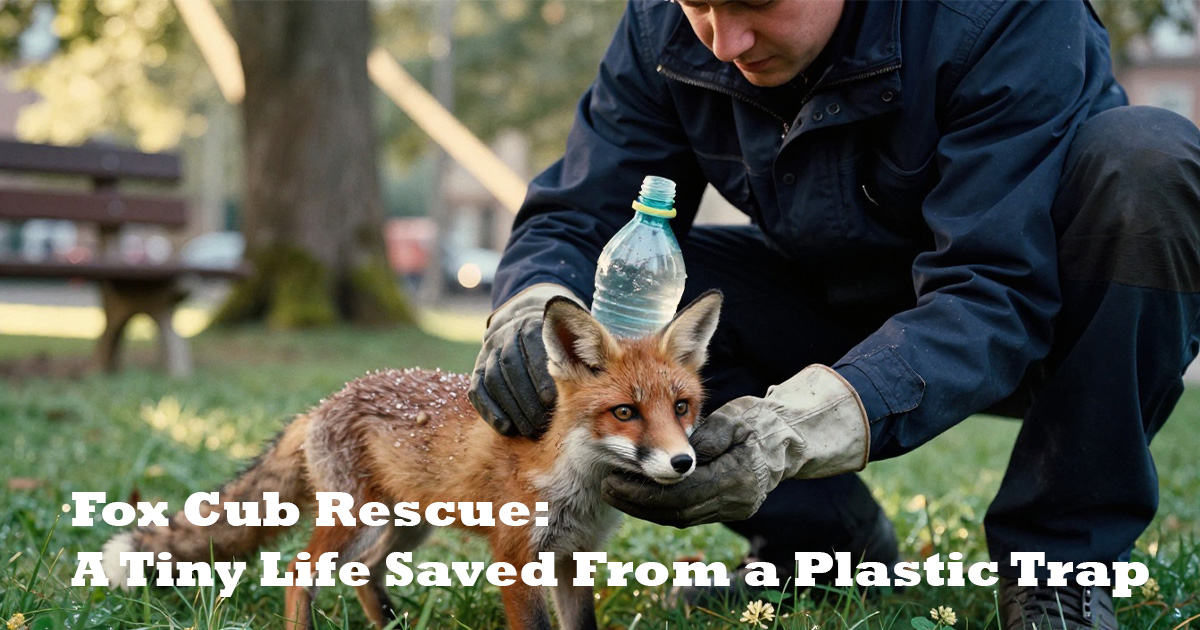
A heartbreaking fox cub rescue in Glasgow has reminded people around the world about the dangers of plastic pollution and the importance of protecting wildlife.
A 12-week-old fox cub spent almost two days with a clear plastic bottle trapped over its head. The poor animal could not eat, drink, or free itself from the dangerous situation. During this time, the sharp plastic edge slowly created a painful wound around its neck.
Thankfully, the story did not end in tragedy. A concerned member of the public noticed the struggling fox and quickly contacted wildlife rescuers. As a result, the rescue team reached the animal in time and gave it a second chance at life.
This emotional fox cub rescue story is about more than one young animal. It highlights how careless human actions can put wildlife at risk. At the same time, it shows how compassion, awareness, and quick action can help save innocent creatures.
The Shocking Discovery That Started This Fox Cub Rescue
A member of the public found the fox with a plastic bottle tightly stuck over its head.
After realising the animal was in danger, the person immediately contacted the Scottish SPCA. Because of this quick action, rescuers learned about the fox’s condition and started looking for it.
A rescue officer arrived on June 26. However, the frightened cub escaped into its den before the team could reach it. Sadly, the fox had already spent more than 24 hours trapped inside the plastic bottle.
The bottle was not just an uncomfortable object. Instead, it became a serious threat to the young animal’s life.
The fox could not use its paws to remove the container. Moreover, every attempt to escape increased its stress and caused the wound around its neck to become worse.
Without immediate help, the cub faced several dangers:
- Severe dehydration
- Starvation
- Infection
- Breathing difficulties
- Life-threatening injuries
This fox cub rescue situation shows why quick reporting matters. When people notice injured wildlife, fast action can greatly improve an animal’s chance of survival.
This situation shows why quick reporting is so important when people notice injured wildlife.
How Rescuers Completed the Fox Cub Rescue Mission
The next day, wildlife officers returned to continue their search for the trapped fox.
After spending hours looking through thick vegetation, officers Ella Mackenzie and Calum Wilson finally spotted the cub again. The fox still had the bottle stuck over its head, and the rescuers knew they needed to act quickly.
The team carefully approached the frightened animal, safely captured it, and removed the plastic container.
This moment marked a major turning point in the entire fox cub rescue mission.
Once they freed the fox, rescuers quickly transported it to the University of Glasgow’s Small Animal Hospital. There, veterinary experts checked the injuries and started immediate treatment.
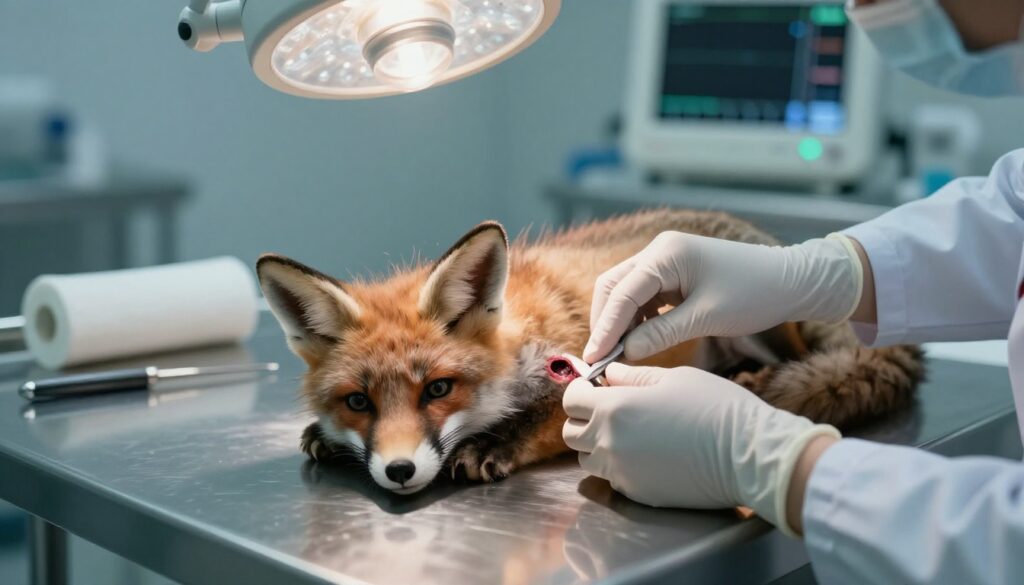
The cub needed sedation so the doctors could clean the deep wound around its neck. They also provided pain relief and monitored the animal throughout the night.
Later, the team moved the fox to a wildlife rehabilitation centre. Staff continued providing care and closely watched its recovery.
This rescue needed patience, experience, and teamwork. Thanks to the dedication of everyone involved, the young fox received the help it needed and gained a real chance to return to the wild.
The Hidden Plastic Waste Danger Behind This Fox Cub Rescue
Many people associate plastic pollution with oceans and marine life. However, plastic waste also threatens animals living in cities, parks, forests, and rural areas.
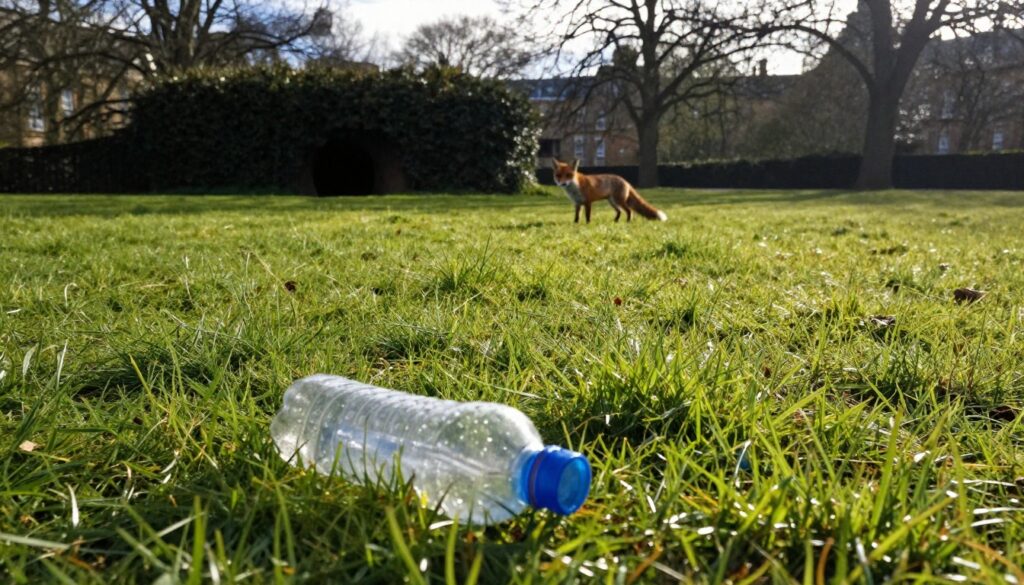
This fox cub rescue proves that everyday litter can become a serious danger. A discarded plastic bottle caused life-threatening injuries to a young fox, showing how one careless act can have devastating consequences.
Plastic containers often attract wildlife because they still smell like food or contain leftover liquids. As a result, curious animals may push their heads inside and become trapped. Young animals face an even greater risk because they naturally explore their surroundings without recognizing the danger.
Even a single discarded item can become a deadly trap.
Many other animals also suffer because of litter, including:
- Birds trapped in plastic packaging
- Hedgehogs stuck inside food containers
- Marine animals injured by plastic waste
- Deer caught in discarded plastic materials
Ultimately, this fox cub rescue serves as a powerful reminder that litter does not simply disappear after someone throws it away. Instead, it remains in the environment, where it can continue harming wildlife for months or even years.
Why This Fox Cub Rescue Story Matters
The successful fox cub rescue story is inspiring because it shows the powerful impact of paying attention and taking action.
A person walking through the area noticed the fox in trouble and quickly reported the problem. Soon after, rescue workers arrived, and veterinarians provided the care the animal needed. Together, these efforts gave the young fox a second chance.
Unfortunately, many wild animals suffer quietly. They often hide when they feel scared or injured, which means people may never discover their struggles.
That is why public awareness plays such an important role. When people stay alert, they can identify problems before they become worse.
For example, if someone finds an animal trapped, injured, or acting unusually, contacting a wildlife organisation can help save its life.
In the end, small acts of responsibility can create meaningful changes for animals and the environment.
Plastic Litter: A Problem That Can Be Prevented
The biggest lesson from this fox cub rescue is simple: prevention works better than treatment.
The plastic bottle that trapped the fox created a dangerous situation, but people could have avoided it by disposing of the item properly.
Fortunately, small daily habits can help protect wildlife:
Crush and Recycle Plastic Bottles
Before recycling a bottle, crush it whenever possible. This simple step reduces the chance of animals getting their heads stuck inside.
Cut Dangerous Packaging
Before throwing away items like face masks with elastic loops or plastic rings, cut them apart. This prevents animals from becoming tangled or trapped.
Never Leave Rubbish Outdoors
Parks, streets, and countryside areas belong to everyone, including wildlife. Therefore, leaving rubbish behind creates unnecessary dangers for animals.
Take Food Containers Home
Empty containers can still attract curious animals because of leftover smells. Always place them in secure bins or carry them home for proper disposal.
Ultimately, these small actions take only a few seconds. However, they can prevent serious injuries and help protect countless animals.
How Communities Can Support Wildlife Protection
Wildlife protection is not only the job of rescue organisations. Communities also play an important role in keeping animals safe.
Everyone can help by taking simple actions, such as:
- Keeping local areas clean
- Reporting injured or trapped animals
- Supporting wildlife conservation groups
- Teaching children about responsible waste disposal
- Reducing unnecessary plastic use
Moreover, protecting the environment begins with everyday choices. When people care for their surroundings, they create safer spaces for both wildlife and communities.
A cleaner neighbourhood benefits everyone. It reduces risks for animals and helps nature recover.
The story behind this fox cub rescue proves that every action matters. Even small efforts can create a positive change for wildlife.
The Fox Cub’s Journey Back to the Wild
After the rescue, the fox began a slow recovery process.
Veterinary teams monitored the wound carefully and helped the cub regain its strength. One of the biggest positive signs was that the fox started eating solid food again.
The goal is to release the animal back into the wild once it is healthy enough.
Before release, specialists will continue checking the fox’s condition and may use tracking methods to understand how well it adapts after rehabilitation.
The journey is not finished yet, but this young animal has already overcome a major challenge.
This fox cub rescue represents hope, compassion, and the difference humans can make when they choose to help.
The story of this fox cub rescue is a powerful reminder that wildlife depends on responsible human behaviour.
A simple plastic bottle almost ended the life of a young fox. Thankfully, people noticed, acted quickly, and gave the animal a second chance.
Protecting wildlife does not always require huge efforts. Sometimes it begins with throwing away rubbish properly, reducing plastic waste, and caring about the world around us.
Every animal deserves a safe environment.
This brave little fox’s survival story shows that awareness and kindness can truly make a difference.
About the Author