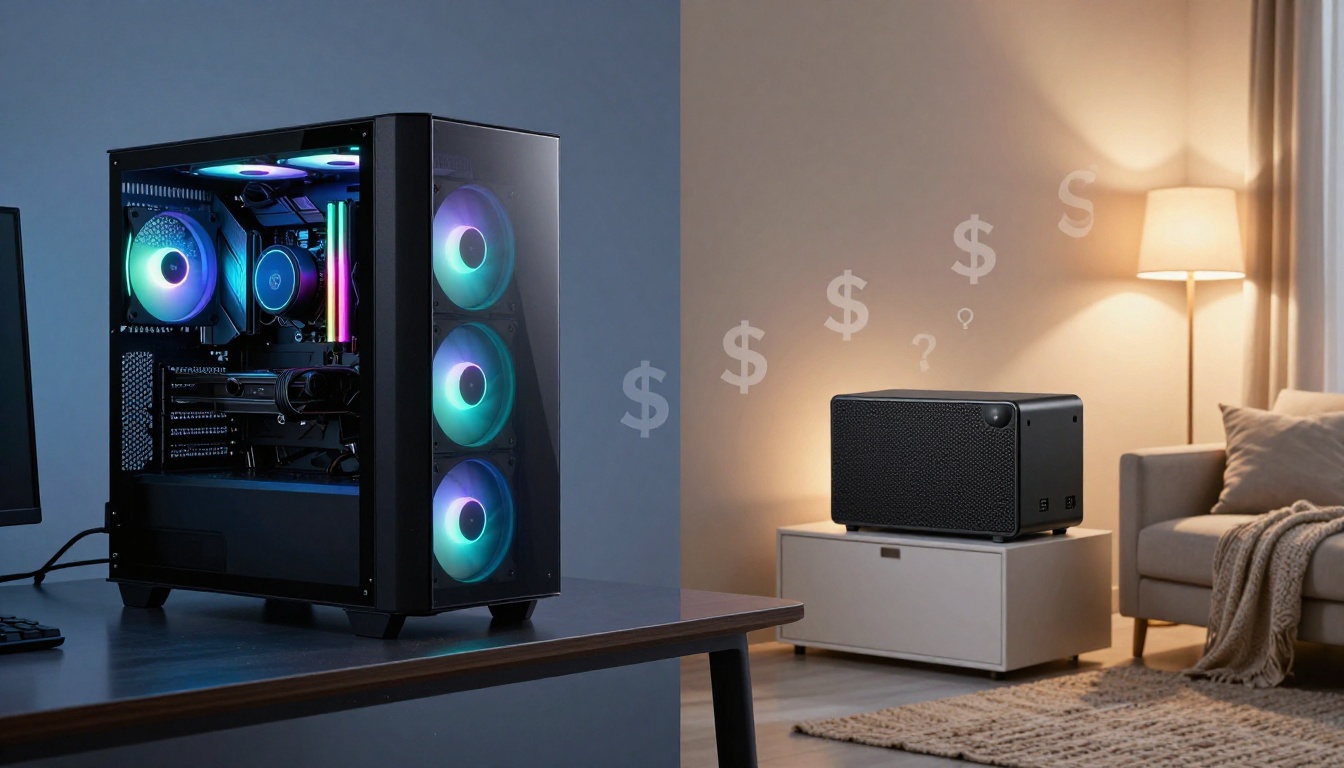
Why This Steam Machine Review Matters
This Steam Machine review comes at a time when the line between consoles and PCs is getting blurrier than ever. Valve’s living-room gaming box promises a sleek, console-like experience packed with PC power, but the reality is more complicated.
At first glance, it feels like the perfect middle ground. Small. Quiet. Powerful enough for modern games. But as we dig deeper into this Steam Machine review, one thing becomes clear: the experience is impressive, but the price situation could make or break it entirely.
Gamers today want simplicity without sacrificing performance. The Steam Machine tries to deliver exactly that—but whether it succeeds depends on what you expect from your living room setup.
Steam Machine Design and Build Quality
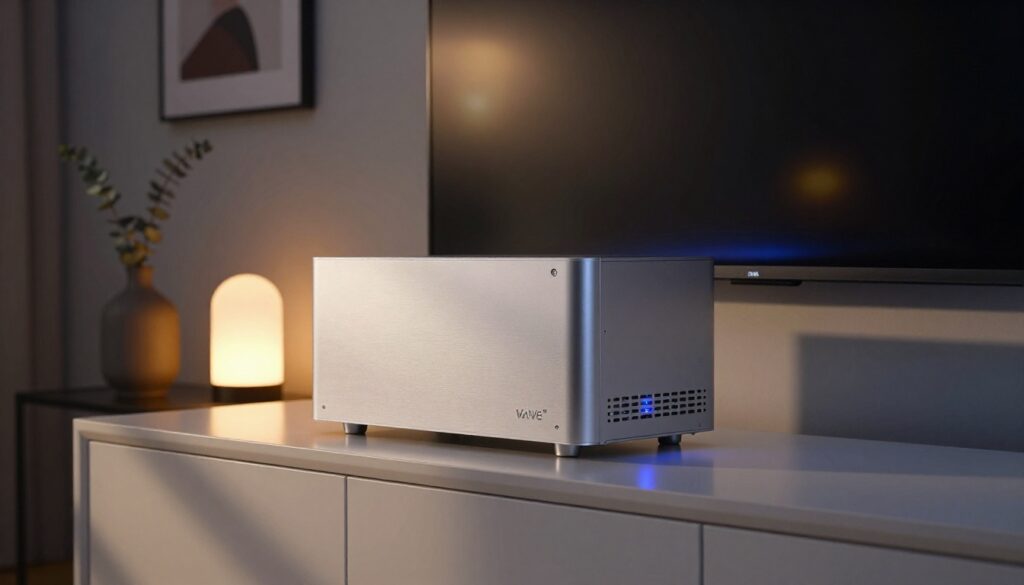
The first thing you notice in any Steam Machine review is the design. Valve clearly focused on making this device blend into a living room rather than stand out like a traditional gaming PC.
It’s compact—roughly the size of a lunchbox—and built with a dense, premium feel. The matte black finish gives it a minimalist vibe, avoiding the flashy gamer aesthetic. You could easily place it next to a soundbar or console and forget it’s even a PC.
Inside, though, it’s a different story. The hardware is serious:
- AMD Zen 4 CPU (6 cores, 12 threads)
- RDNA 3 GPU with 28 compute units
- 16 GB DDR5 RAM
- 512 GB or 2 TB NVMe SSD
- 8 GB GDDR6 VRAM
Despite the power inside, cooling is impressively quiet. In fact, most users testing the system described it as nearly silent under load. That alone makes this Steam Machine review stand out, because silence is rare in small gaming rigs.
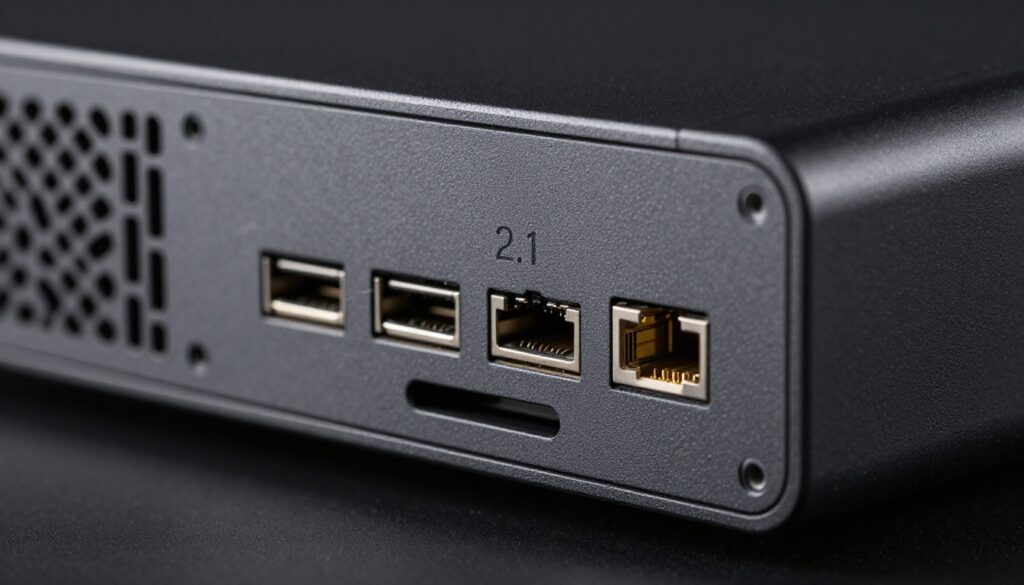
Connectivity is also generous, with HDMI 2.1, USB ports, Wi-Fi 6E, Bluetooth 5.3, and Ethernet support. It feels like Valve wanted zero compromises on usability.
Still, one concern appears early: that 8 GB VRAM limit may become restrictive in future AAA titles.
Inside the Hardware: What Powers the System
Performance is where this Steam Machine review gets interesting.
The system sits between an Xbox Series S and a PlayStation 5 in raw gaming power. It handles 1080p and 1440p gaming quite well, but it isn’t designed for native 4K without help.
Games like Cyberpunk 2077, Elden Ring, and Starfield run smoothly—but only if you adjust settings. Ultra presets are often too demanding, pushing users toward medium or high settings instead.
This is where expectations matter. The Steam Machine is not a “set it and forget it” console. Instead, it behaves like a fixed-spec PC that still requires tweaking.
Upscaling technologies like FSR become essential for smoother performance at higher resolutions. Without them, frame rates can drop quickly in demanding scenes.
So, this Steam Machine review reveals a key truth: it performs well, but not effortlessly. You still interact with graphics settings, drivers, and optimization choices.
For PC gamers, that’s normal. For console players, it might feel like extra work.
Steam Machine Review: The Console vs PC Debate
One of the biggest themes in this Steam Machine review is identity. Is it a console? Or is it a PC in disguise?
The answer is: it’s both—and neither.
On one hand, it offers the simplicity of a console:
- Plug it into your TV
- Use a controller
- Access your Steam library instantly
On the other hand, it still behaves like a PC:
- Graphics settings matter
- Game optimization varies
- Performance depends on configuration
That dual identity is both its strength and weakness.
For gamers who already enjoy PC flexibility, this hybrid approach feels natural. But for those expecting console simplicity, the experience may feel inconsistent.
This Steam Machine review highlights that Valve isn’t trying to replace consoles. Instead, it’s trying to redefine the living-room gaming PC category.
And that’s a risky position to take.
Steam Machine Review: The Pricing Problem Explained
Now we reach the most controversial part of this Steam Machine review: pricing.
Valve hasn’t confirmed a final price yet, and that uncertainty says a lot. Based on component costs alone, estimates suggest a manufacturing cost close to $700–$850 per unit.
And that’s before profit.
Memory prices, especially DDR5 RAM and SSD storage, are a major factor driving costs up. A 16 GB DDR5 module alone can cost nearly $200, which is significantly higher than previous years.
Add the custom motherboard, cooling system, and compact chassis, and suddenly the price climbs quickly.
Analysts suggest the retail price could land anywhere between $800 and $900—or even higher if Valve aims for profit margins.
That puts it in direct competition with high-end consoles like the PlayStation 5 Pro tier.
This is the biggest tension in the entire Steam Machine review: the hardware is excellent, but the price may push it out of reach for many gamers.
Valve is reportedly debating whether to subsidize the hardware or stick to its traditional non-loss model. Either way, the decision will shape the product’s future.
Steam Machine Review: Who Should Actually Buy It?
So, who is this system really for?
This Steam Machine review makes it clear that the device is not aimed at casual console gamers. Instead, it targets a very specific audience:
- PC gamers who want a living-room setup
- Steam library owners with large game collections
- Users who value silence and compact design
- Gamers comfortable adjusting settings
If you fall into that group, the Steam Machine feels appealing. It offers flexibility without the complexity of building a PC.
But if you want a plug-and-play console experience, this may not be the best fit.
It’s not about simplicity. It’s about control.
And that’s the dividing line.
About the Author