Congo’s Likweli Monkey is an amazing new discovery that reminds us how much wildlife is still waiting to be found. Deep in the forests of the Democratic Republic of the Congo, researchers spent nearly 20 years searching for answers about this unusual monkey.
The journey started with a blurry photo taken high in the treetops. At first, scientists had only a few clues. Years later, after field studies, DNA testing, and help from local communities, they confirmed that this mysterious animal was a completely new species.
This discovery gives scientists a better understanding of evolution and the hidden life of rainforest animals. It also sends an important message. Many species may disappear before we even know they exist.
The newly identified monkey, known scientifically as Colobus congoensis, has a unique face, unusual behaviour, and a very small natural habitat. Protecting this rare primate will be crucial to ensure it survives for future generations.
Congo’s Likweli Monkey: A Rare Species With a Surprising Appearance
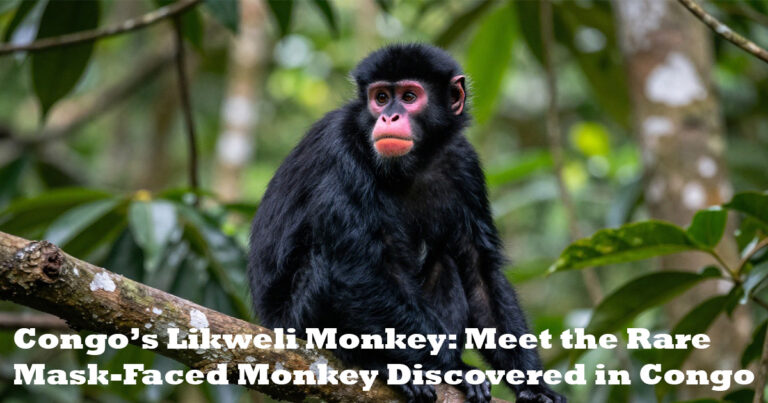
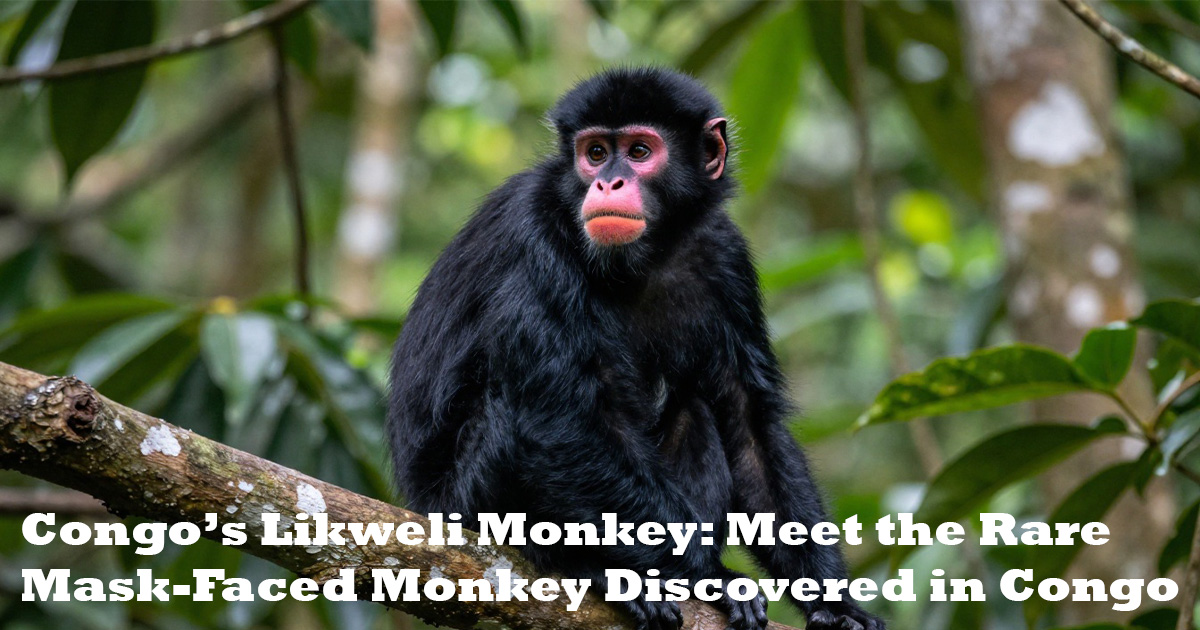
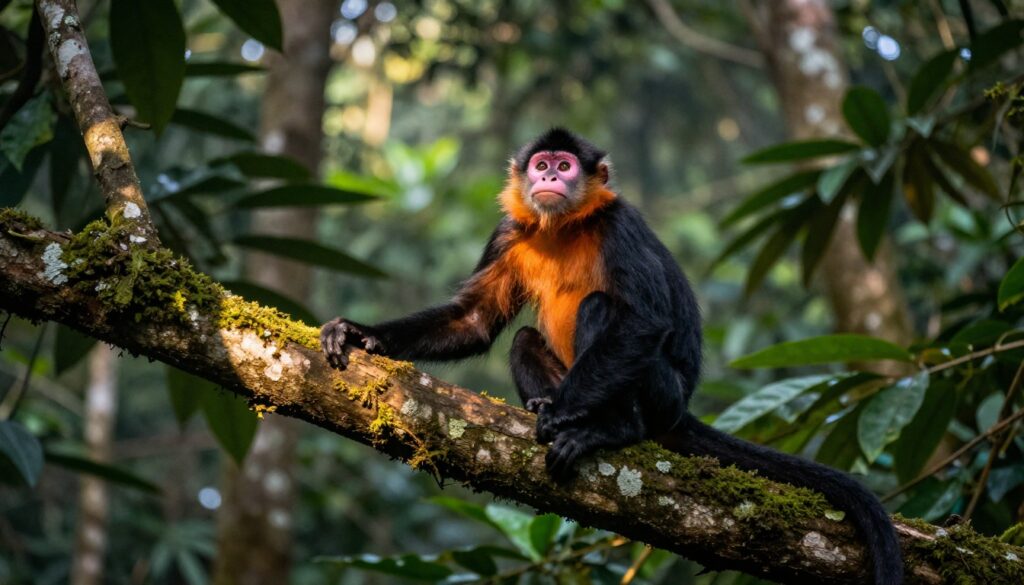
The first thing people notice about Congo’s Likweli Monkey is its unusual face. Unlike other African colobus monkeys, this species has a bright pinkish-orange patch around its mouth and nose. This creates a mask-like look that makes the monkey easy to recognize.
The rest of its body has the classic features of a colobus monkey. It has a shiny black coat, large folded ears, and long arms that help it move through the forest canopy.
Colobus monkeys also have a unique hand structure. They have very small thumbs or almost no thumbs at all. This helps them move quickly from branch to branch. Instead of using their hands to grab things like many other monkeys, they depend on strong arms and flexible bodies to travel through the trees.
An adult Congo’s Likweli Monkey can grow up to about 1.3 metres from head to tail and weigh around 7 kilograms. It may not be the biggest monkey, but its special appearance makes it impossible to ignore.
Scientists believe the monkey’s unusual face may reveal secrets about ancient primate evolution. Similar patterns are found in some Asian colobine monkeys. This suggests that the facial markings could be an old feature that has survived for millions of years.
Why Congo’s Likweli Monkey Discovery Took So Long
Finding a new species may sound easy, but it often takes years of hard work. Congo’s Likweli Monkey remained a mystery for almost two decades before scientists could confirm its identity.
The first clue came in 2008. Researchers captured a blurry photo of an unknown monkey during a survey near the Lomami River. The image showed that something was different, but there was not enough evidence to name it as a new species.
The monkey stayed hidden for many years. Then, in 2018, another sighting gave researchers a reason to start a deeper investigation.
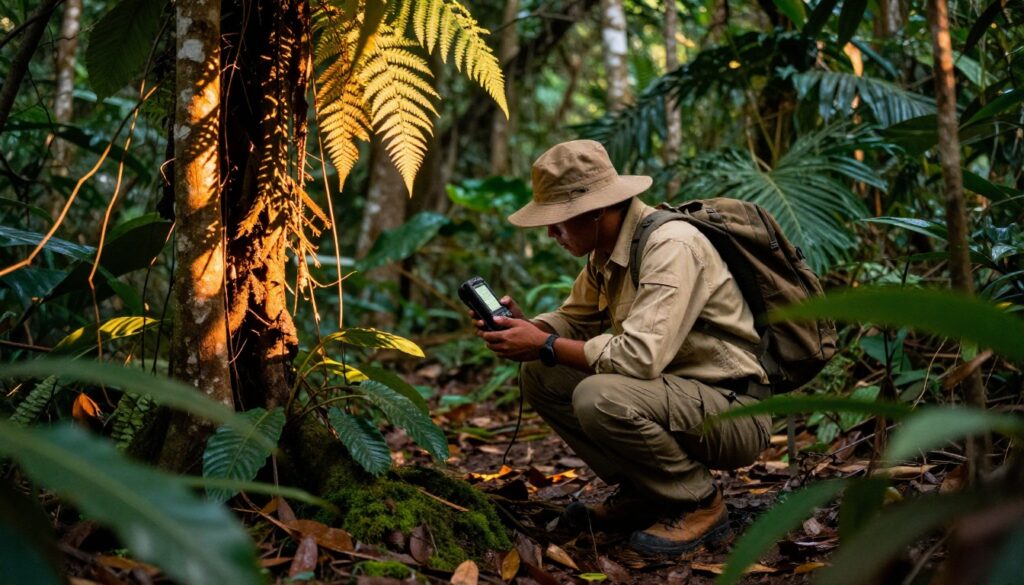
From 2018 to 2022, scientists collected sightings, recorded monkey calls, studied physical samples, and gathered information from nearby communities. They spoke with people from 52 villages around the monkey’s habitat. Surprisingly, only eight villages had ever seen the animal.
This showed how rare and secretive the species really was.
Researchers often heard the monkeys before they saw them. Their deep, powerful calls moved through the forest canopy and helped scientists find their location.
After years of research, the team collected enough proof. Genetic testing, skull studies, and physical features showed that this monkey was not just a variation of another species. It was a completely new species with its own unique story.
The Hidden World of Congo’s Likweli Monkey
Living in the Congo rainforest is not easy. Animals need special skills to survive, and Congo’s Likweli Monkey seems well adapted to its forest home.
This rare monkey spends most of its time high in the treetops. It moves through the canopy in small groups, jumping between branches and searching for food. Like other colobus monkeys, it helps the forest by spreading seeds as it travels.
Scientists are still learning about its daily life. Early studies show that these monkeys are shy and careful around humans. They are often difficult to spot because they stay hidden among the thick forest leaves.
One feature that makes Congo’s Likweli Monkey unusual is its strong smell. Many colobus monkeys have a natural scent, but researchers say this species appears to have a much stronger odour.
Scientists have not yet discovered what causes this smell. Future research may show if the scent helps the monkeys communicate, attract mates, or warn others.
This discovery proves that even well-known animal groups can still surprise us. The more researchers study Congo’s Likweli Monkey, the more they learn about the hidden world of rainforest wildlife.
A Twenty-Year Search Through the Congo Rainforest
The discovery of Congo’s Likweli Monkey is a story of patience, teamwork, and dedication.
The Congo Basin is one of the richest wildlife areas on the planet. It is home to thousands of plant and animal species. However, studying wildlife there is not easy. The forests are dense, many areas are remote, and reaching certain locations can take a lot of time.
Researchers needed more than modern tools. They also relied on the knowledge of local communities. People living near the forest shared information about sightings, animal movements, and places where the monkeys might be found.
In 2021, park rangers recovered several monkeys that had been hunted for bushmeat. Although the situation was unfortunate, these remains helped scientists collect important samples. The evidence allowed them to study the monkey’s body features and DNA.
Genetic research showed that Congo’s Likweli Monkey separated from its closest known relative, Colobus satanas, millions of years ago. This proved that the monkey is a separate species with its own unique place in the primate family.
The discovery also has special meaning for the Democratic Republic of the Congo. It highlights the incredible wildlife diversity found in the country’s forests and shows how much there is still left to explore.
Why Protecting Congo’s Likweli Monkey Is Urgent
Finding a new species is only the first step. The bigger challenge is making sure it survives for the future.
Congo’s Likweli Monkey has one of the smallest known habitats among colobus monkeys. Scientists believe its current range covers only about 1,700 square kilometres.
This small living area puts the species at risk. Many related monkeys live across much larger regions, but this monkey depends on a limited part of the Congo rainforest.
Threats like habitat loss, hunting, and a falling population could have a serious impact. Because of these dangers, researchers believe Congo’s Likweli Monkey should receive endangered status.
Most sightings have taken place inside Lomami National Park, where the species has some protection. However, scientists say stronger laws are needed to stop hunting in nearby areas.
More research is also important. Scientists still need to learn how many of these monkeys exist, how they reproduce, and how they survive changes in their habitat.
Protecting Congo’s Likweli Monkey starts with understanding it. The more we learn about this rare animal, the better we can protect it for future generations.
What This Discovery Means for Science
The discovery of Congo’s Likweli Monkey reminds us that nature still has many secrets to reveal.
Today, technology helps scientists find new species faster. However, discoveries like this still depend on careful fieldwork. Researchers spend months or even years watching animals, collecting evidence, and working with local communities.
This monkey also shows why rainforest protection matters. Forests are not just groups of trees. They are living ecosystems where plants and animals depend on each other to survive.
Every new species discovery helps scientists understand evolution and the long history of life on Earth.
The story of Congo’s Likweli Monkey started with one unclear photograph. Through years of research and dedication, that small clue became an important scientific discovery.

A hidden animal that was once unknown is now recognized around the world.
Congo’s Likweli Monkey is much more than a monkey with a unique face. It represents millions of years of evolution and shows the incredible diversity of rainforest life.
Its mask-like facial markings, strong scent, and secretive behaviour make it one of the most fascinating primate discoveries in recent years.
But discovering this monkey is only the beginning. Its future depends on protecting its forest home and reducing threats like hunting.
The journey from a blurry image to a confirmed species took nearly 20 years. Now, the next step is protecting this rare monkey so future generations can continue to learn about it.
About the Author