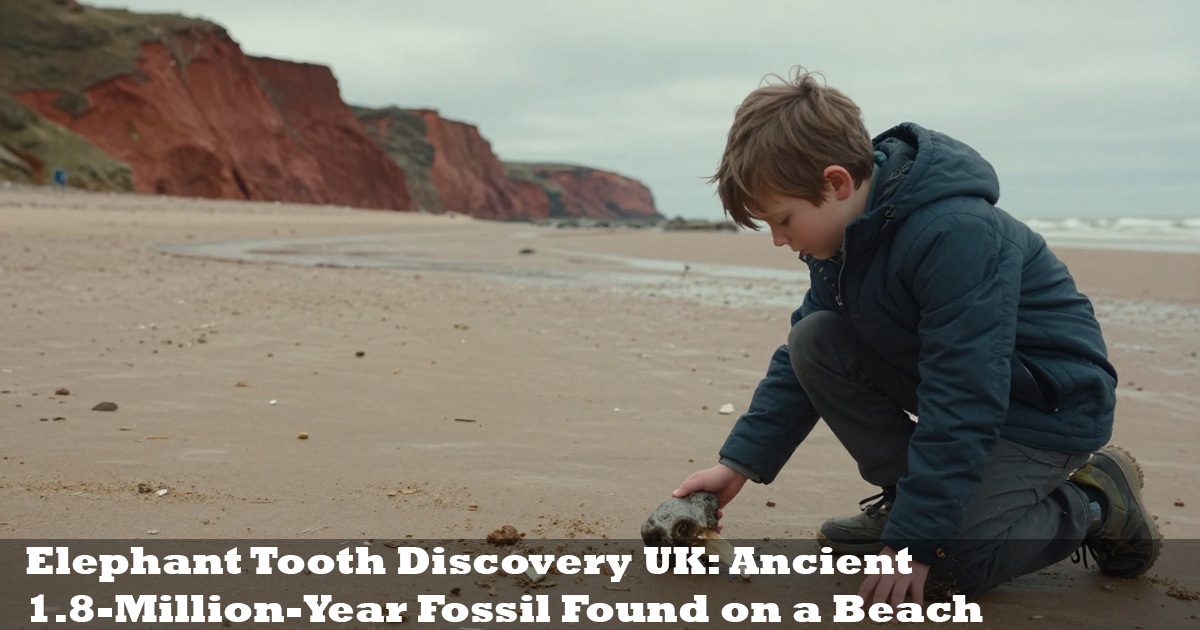
The elephant tooth discovery UK story begins with something incredibly simple—an ordinary beach walk that turned into an extraordinary scientific moment.
An 11-year-old boy, walking along the Suffolk coast with his mother, spotted what looked like a strange, heavy stone near the waterline. Within minutes, that “stone” would turn out to be a 1.8-million-year-old elephant molar. A fossil from a long-extinct giant that once roamed Europe.
This elephant tooth discovery UK case is more than just a lucky find. It is a reminder that ancient history is still hidden beneath our feet, slowly being revealed by nature itself. Coastal erosion, tides, and time are constantly reshaping the British shoreline, often exposing secrets from deep prehistory.
In this article, we’ll explore how this astonishing discovery happened, what it tells us about ancient elephants, and why the UK coastline continues to surprise both scientists and everyday walkers.
A Beach Walk That Changed Everything
The heart of the elephant tooth discovery UK story begins with young Charlie Orchard-Lisle and his mother, who were walking along a Suffolk beach.
At first, it was just a normal day in May. The tide was low, and the air felt fresh. Nothing suggested that history would reveal itself so soon. However, only ten minutes into the walk, Charlie noticed something unusual near the water’s edge. He spotted a fist-sized object that looked too heavy and too smooth to be a simple stone.
He picked it up, and it felt different right away. It was dense and glossy. In fact, it almost felt like it carried a hidden weight of time inside it.
Soon after, experts confirmed what the object really was. It was an ancient molar from an extinct elephant relative. They also confirmed that coastal erosion had uncovered it after it stayed buried for around 1.8 million years.
Overall, the elephant tooth discovery UK moment shows something powerful. Curiosity, timing, and observation can lead to major scientific discoveries—even in a child.
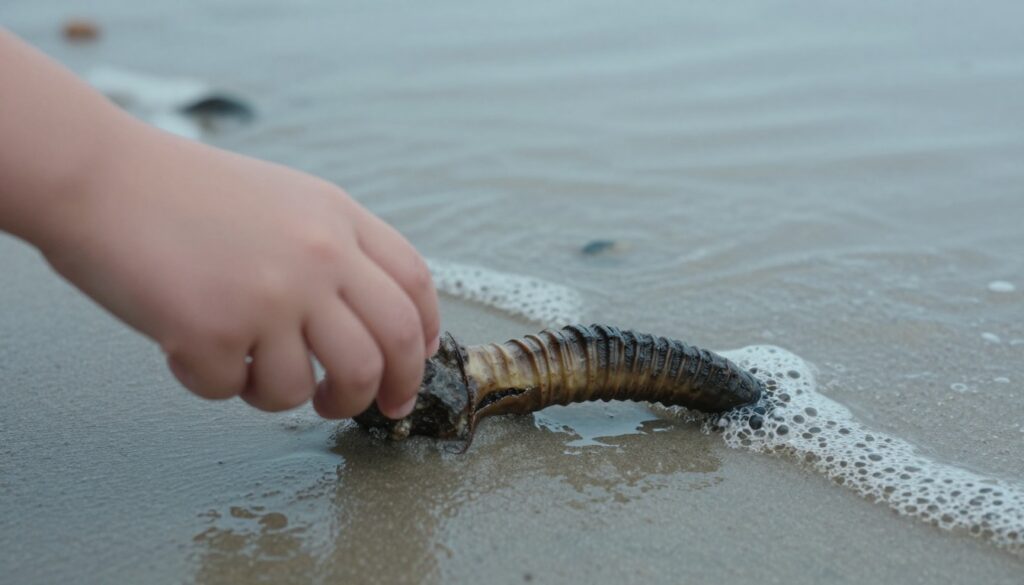
Elephant Tooth Discovery UK and the Ancient Species Behind It
The fossil belonged to an extinct species called Anancus arvernensis, a prehistoric elephant relative that once roamed across Europe and parts of Asia.
Unlike modern elephants, Anancus looked quite different. For example, it had short, straight tusks. It also had long legs that helped it move across open environments. In addition, it survived mainly on a browsing diet of leaves and shrubs. It could grow over 8 feet tall at the shoulder.
Its teeth were also very different from those of modern elephants. Instead of flat, ridged grinding surfaces, this species had rounded, blunt cusps. As a result, it was better adapted for chewing tougher vegetation.
Meanwhile, experts from the Natural History Museum in London confirmed the identification using photographs. They studied the molar’s structure, enamel preservation, and mineralization. As a result, they classified it as a textbook example of this extinct species.
Overall, this part of the elephant tooth discovery UK story connects modern science with an ecosystem that disappeared nearly 2 million years ago.
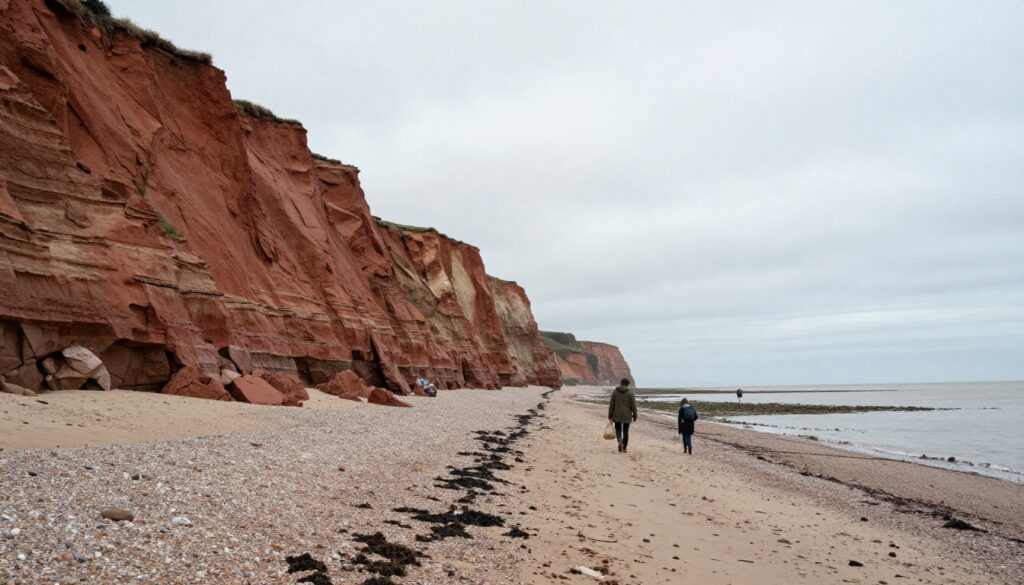
How the Fossil Reached Suffolk Shores
To understand the elephant tooth discovery UK story, we need to look beneath the surface—literally.
The fossil came from the Red Crag Formation in Suffolk. This geological layer contains ancient sand and shell deposits. In the past, this region was covered by a shallow sea.
Over time, natural erosion and strong coastal forces slowly broke down cliffs in places like Bawdsey. As a result, storms and tides constantly pull material from these ancient layers. Then, they deposit it onto nearby beaches.
Teeth survive especially well in this process. This is because enamel is extremely durable. For example, while bones often break down, teeth can survive for millions of years.
In this case, wave action likely dislodged the molar. It then carried it only a short distance before it washed ashore. Interestingly, it landed exactly where a curious 11-year-old was walking.
Overall, the elephant tooth discovery UK phenomenon is closely linked to ongoing coastal erosion along the Suffolk coast.
Why Elephant Tooth Discovery UK Finds Keep Happening
The UK coastline is one of the richest fossil zones in Europe. In particular, Suffolk is a major hotspot for discoveries.
There are several reasons why the elephant tooth discovery UK story is not unique. First, constant erosion plays a big role. Storms regularly expose new layers of ancient sediment. As a result, fossils often appear on the surface.
Second, the Red Crag Formation contains both marine and land fossils. Therefore, it remains a rich source of prehistoric remains.
Third, preservation conditions are strong in this area. Minerals in the sediment help protect teeth and shells for millions of years.
Finally, the beaches are highly accessible. Because of this, fossils often wash directly onto walking paths where people can easily spot them.
Interestingly, many important discoveries are not made by scientists. Instead, they are found by everyday people such as families, walkers, and children exploring the shoreline.
As a result, this democratization of discovery makes the elephant tooth discovery UK story especially powerful. It shows that science is not limited to laboratories. In fact, it often begins outdoors in moments of curiosity.
What Elephant Tooth Discovery UK Teaches Us About Earth’s Past
Every fossil tells a story, and the elephant tooth discovery UK is no exception.
This single tooth opens a window into a world that existed nearly two million years ago. At that time, Britain had a very different climate. In addition, ancient forests and open landscapes existed side by side. Large herbivores also shaped the ecosystem. Meanwhile, early human ancestors may have been emerging in other regions.
The presence of Anancus arvernensis in this region highlights how diverse prehistoric Europe once was.
What makes the elephant tooth discovery UK especially fascinating is the way it connects deep time with a modern beach walk. It brings millions of years into a single object that fits in a child’s hand.
As a result, this connection feels both rare and powerful.
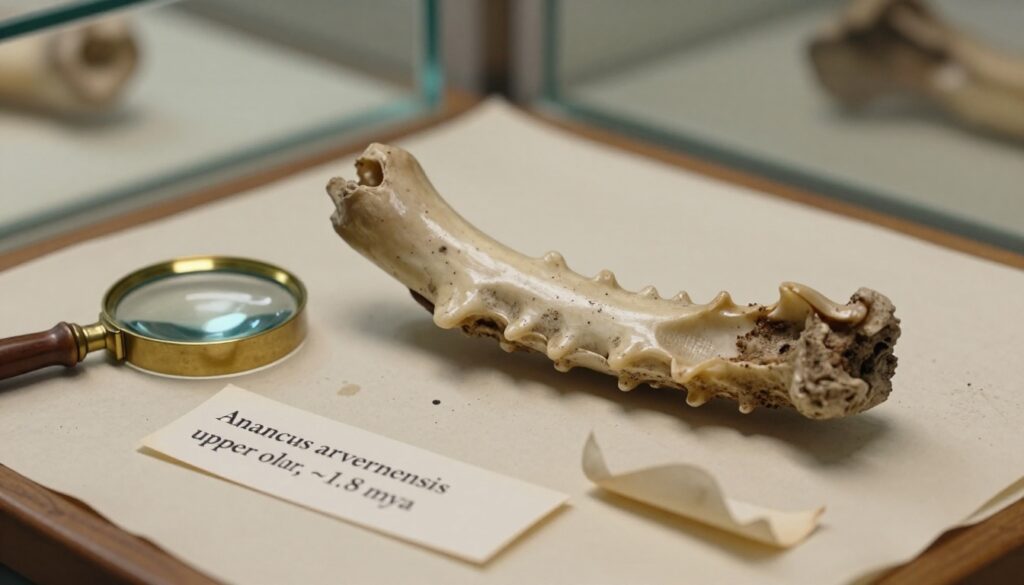
What Happens After an Elephant Tooth Discovery UK Find
In this case, the family is still deciding whether to keep the fossil or donate it for scientific study.
What’s important is that the elephant tooth discovery UK was properly documented, ensuring it contributes to scientific understanding even if it remains in private hands.
About the Author