AI entertainment trends in 2026 are no longer experimental—they are fully embedded into how movies, music, and digital content are created, distributed, and consumed. What started as early adoption in Hollywood and streaming platforms has now become a global industry standard.
From AI-assisted filmmaking to hyper-personalized music streaming, artificial intelligence is reshaping the creative economy at every level. Production pipelines are faster, costs are lower, and audiences are expecting more personalized experiences than ever before.
In 2026, the entertainment industry is no longer asking “Should we use AI?” The real question is “How far can we go with it?”
AI Entertainment Trends Overview 2026
The biggest AI entertainment trends in 2026 revolve around generative systems that can produce near-complete creative outputs—scripts, visuals, editing, sound design, and even synthetic actors.
Industry forecasts continue to show strong cost reductions in media production, especially in film and television, where AI now supports nearly every stage of production.
This is no longer about replacing creativity. It is about scaling it at unprecedented speed.
AI Entertainment Trends Driving Major Cost Reduction in Film and TV
A defining AI entertainment trends shift in 2026 is the sharp reduction in production costs across film and television.
Studios are increasingly using AI for:
- Script development and rewriting
- Automated storyboarding
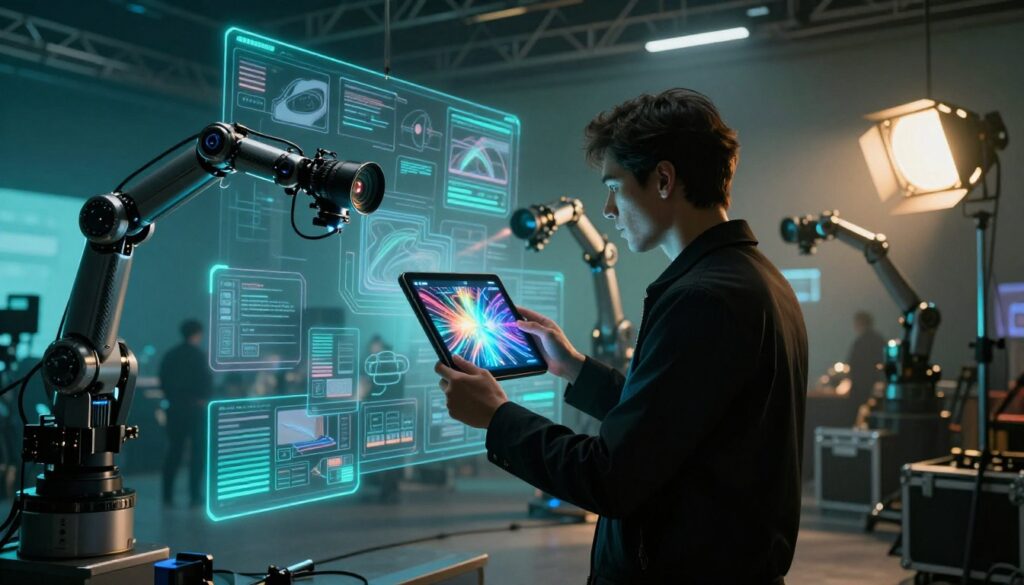
- CGI and visual effects generation
- Voice cloning and dubbing
- Post-production editing
These tools are significantly reducing time-to-release cycles and cutting production costs by double-digit percentages in many cases.
For studios, this means more content output without proportional budget increases.
AI Entertainment Trends Driving the AI Revolution in Music and Streaming
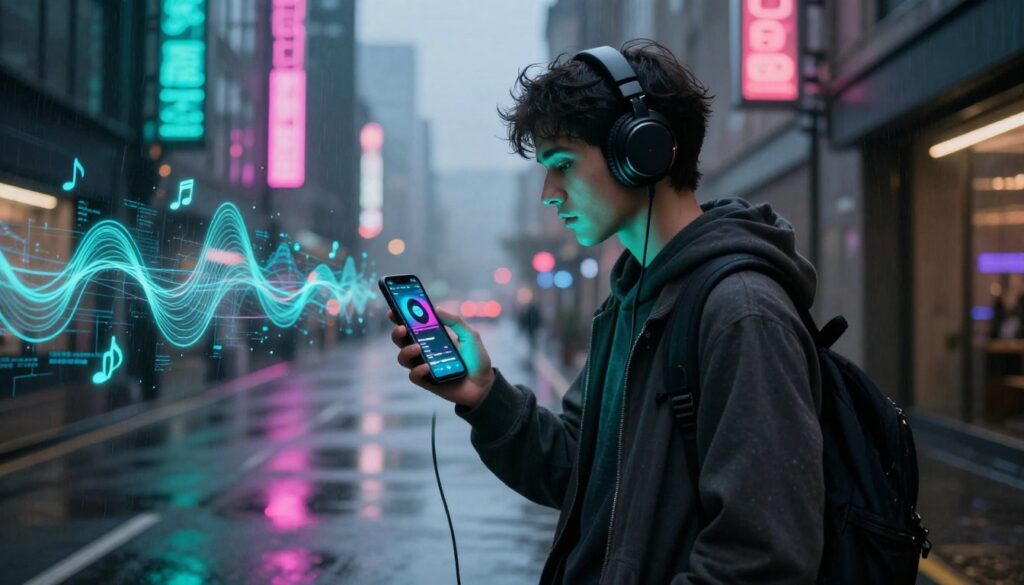
Another major AI entertainment trends development is the transformation of music creation and consumption.
AI systems now generate highly refined playlists and even assist in composing original tracks based on listener mood and behavior.
Key changes include:
- Real-time mood-based playlists
- AI-assisted songwriting tools
- Faster production for independent artists
- Smarter recommendation engines
At the same time, the barrier to entry for music creation has dropped dramatically, leading to a surge in new creators worldwide.
Rise of Solo AI Creators
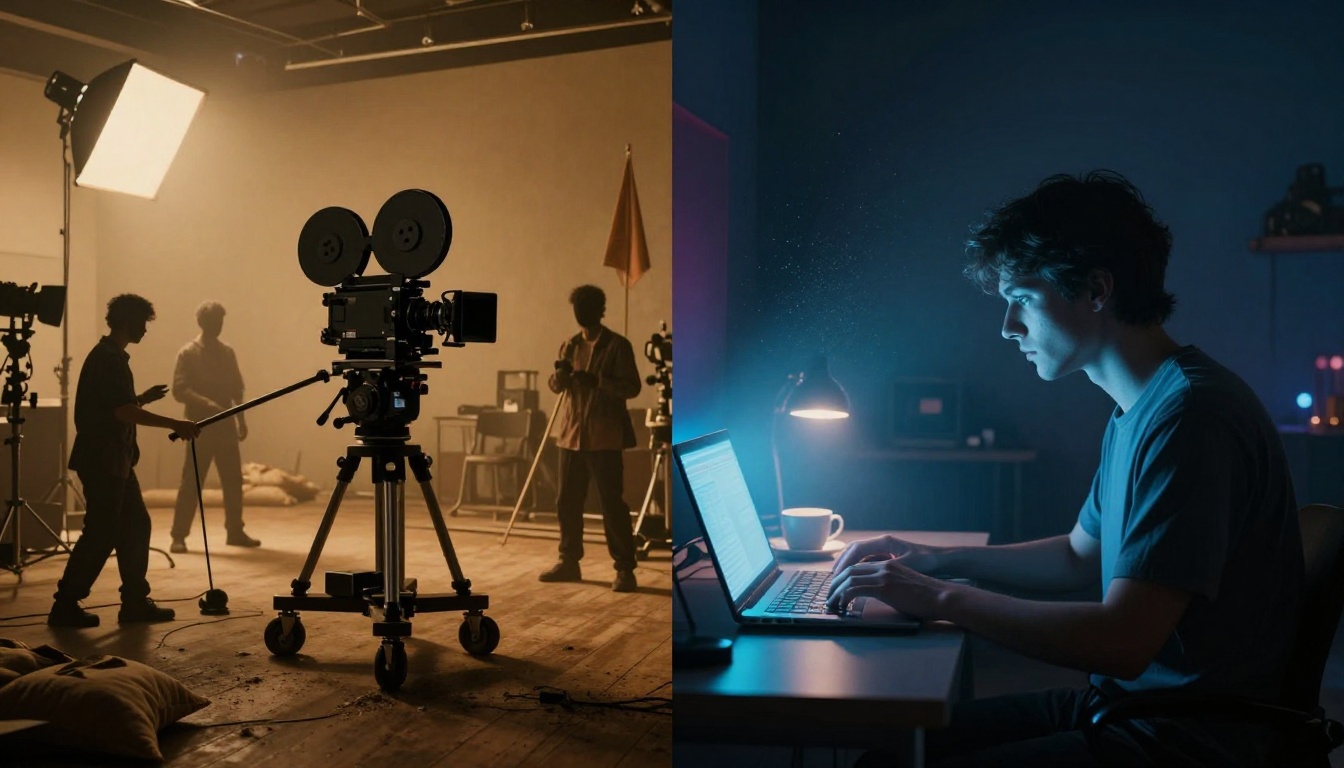
One of the most disruptive AI entertainment trends in 2026 is the rise of independent creators powered entirely by AI tools.
A single person can now:
- Write and refine scripts
- Generate cinematic visuals
- Produce animation or short films
- Publish globally across platforms
This has blurred the line between professional studios and individual creators. While studios still dominate distribution, solo creators are increasingly competitive in output quality.
Streaming Platforms Become Fully Personalized
Streaming platforms are evolving rapidly due to AI entertainment trends in personalization.
AI now drives:
- Real-time content recommendation
- Adaptive thumbnails and previews
- Dynamic content ranking
- Personalized viewing experiences per user
This means no two users see the same version of a streaming platform. Every interface is tailored based on behavior, preferences, and engagement history.
Ethics, Laws, and Creative Ownership
As AI entertainment trends accelerate, ethical concerns are becoming more urgent in 2026.
Key issues include:
- Ownership of AI-generated content
- Protection of actor and voice likeness
- Fair compensation for creative work
- Transparency in AI-assisted production
Regulators across multiple regions are introducing stricter guidelines for labeling and disclosing AI-generated media.
The industry is still trying to find the balance between innovation and protection.
Investment Boom and Industry Future
Investors are heavily focused on AI entertainment trends because they signal major efficiency gains and new revenue models.
Companies leveraging AI effectively are seeing:
- Faster production cycles
- Lower operational costs
- Increased content output
- Improved audience targeting
Experts believe the next phase will be consolidation, where tech companies and media giants merge AI capabilities with global distribution networks.
About the Author