Eye Twitch Superstition is a belief that has existed for generations in many cultures around the world. While some people think a twitching eyelid is a sign of good or bad luck, one shocking real-life case proves how dangerous this myth can become. A 46-year-old man from Wuhan believed an Eye Twitch Superstition and repeatedly slapped his eye to drive away bad luck. Instead, he suffered a detached retina and nearly lost his peripheral vision.
Imagine feeling your eyelid twitch for a few days. Instead of visiting a doctor, you turn to the internet and follow a traditional belief that promises to remove bad luck. Sadly, that is exactly what happened in a shocking case that has captured attention around the world.
The Eye Twitch Superstition convinced a 46-year-old man from Wuhan, China, that his twitching right eye was a sign of misfortune. Hoping to stop the bad luck, he repeatedly slapped his own eye for three days. Instead of solving the problem, he suffered a retinal detachment and nearly lost his eyesight.
This incident reminds us how powerful beliefs can become when they replace medical advice. While traditions are an important part of many cultures, they should never take priority over your health.
What Is Eye Twitch Superstition?
The Eye Twitch Superstition is a belief found in many countries that a twitching eyelid predicts future events.
Different cultures interpret eye twitching differently. In some parts of China, a twitching left eye is believed to bring good fortune, while a twitching right eye is considered a warning of bad luck. Similar beliefs also exist across India, Southeast Asia, Africa, Europe, and Latin America.
Although these traditions have existed for generations, modern medicine has found no scientific evidence connecting eyelid twitching with future events.
The Wuhan Case That Made Eye Twitch Superstition Headlines
A 46-year-old man, identified only by his surname Le, experienced a persistent twitch in his right eyelid.
He first tried resting and using warm compresses, but nothing seemed to work. As his anxiety grew, he searched online for a solution.
Instead of finding reliable medical advice, he came across people claiming that repeatedly slapping the eyelid could drive away bad luck.
Believing the advice, he slapped his eye several times each day for three consecutive days.
Soon, his peripheral vision became narrower until it felt like he was looking through a tunnel.
Doctors later discovered that his retina had detached, requiring emergency surgery to save his eyesight.
The story quickly spread across news websites and social media, leaving many readers shocked that a simple superstition could lead to such a serious injury.

Why People Believe Eye Twitch Superstition
The Eye Twitch Superstition survives because humans naturally look for meaning in unexpected events.
When something unusual happens to our body, we often wonder if it is trying to tell us something.
Over hundreds of years, different societies created stories explaining these mysterious experiences.
Examples include:
- A left eye twitch means money is coming.
- A right eye twitch predicts bad news.
- An eye twitch means someone is talking about you.
- Eye twitching warns of upcoming danger.
These beliefs continue today because they are shared within families and spread rapidly through social media.
However, no scientific research supports these claims.
The Medical Truth Behind Eye Twitch Superstition
Doctors call common eyelid twitching eyelid myokymia. Despite what Eye Twitch Superstition suggests, this condition is usually harmless and is not a sign of good or bad luck.
Some of the most common medical causes include:
Stress
Mental pressure is one of the biggest reasons eyelids begin twitching.
Lack of Sleep
Poor sleep can easily trigger muscle spasms around the eye.
Too Much Caffeine
Coffee, tea, and energy drinks may overstimulate the eye muscles and increase twitching.
Dry Eyes
Dryness can irritate the eyelid muscles and lead to repeated twitching.
Excessive Screen Time
Spending long hours using phones, laptops, or televisions can strain the eyes and cause eyelid twitching.
In most cases, eyelid twitching disappears within a few minutes or days without treatment. Understanding the medical facts instead of believing Eye Twitch Superstition can help people avoid unnecessary fear and seek proper care when needed.
How Eye Twitch Superstition Caused Serious Eye Damage
One of the biggest lessons from this case is that the eye is an extremely delicate organ.
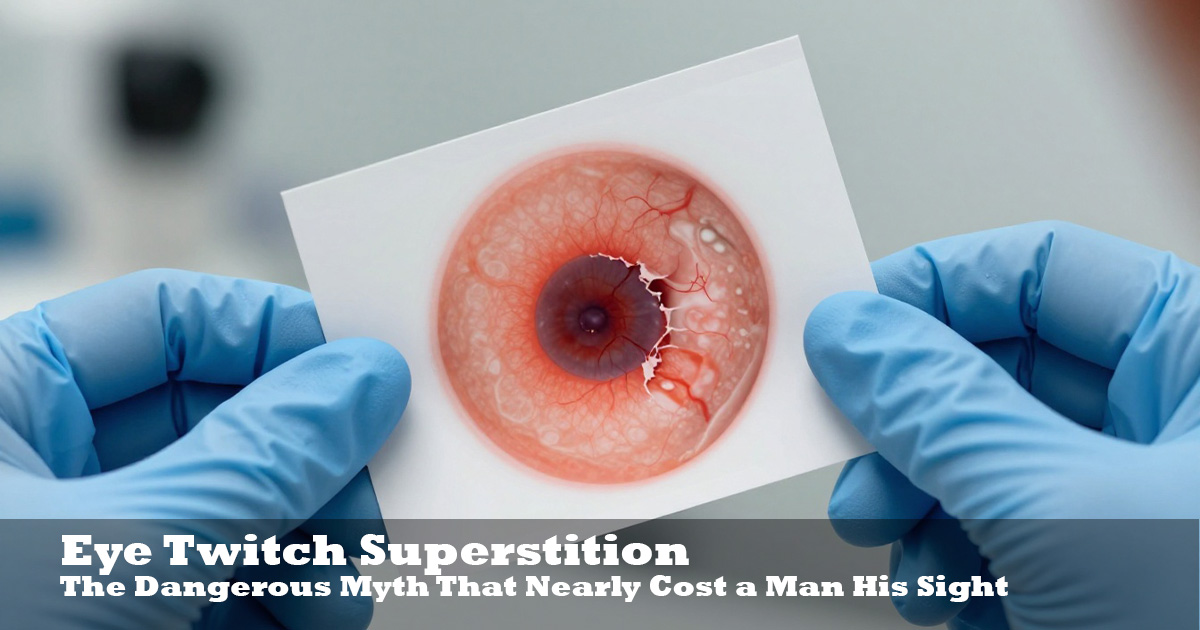
Repeated blunt force can tear the retina, which is the thin layer of tissue at the back of the eye responsible for capturing light.
Once the retina separates from the eye wall, vision begins to disappear.
Common symptoms include:
- Sudden flashes of light
- Floating dark spots
- Blurred vision
- Tunnel vision
- A curtain-like shadow across the eye
A retinal detachment is considered a medical emergency.
Without immediate treatment, permanent blindness may occur.
Symptoms of Eye Twitch Superstition That Need Medical Care
Not every eye twitch requires a doctor.
However, you should seek medical attention if you experience:
Persistent twitching
If the twitch lasts more than several days.
Vision changes
Any blurry vision or narrowing of your vision needs urgent evaluation.
Eye pain
Pain is never considered a normal symptom of simple eye twitching.
Flashes or floaters
These can indicate retinal damage.
Facial weakness
This could point to a neurological condition rather than a simple muscle twitch.

How to Treat Eye Twitch Superstition Safely
Instead of following internet myths, experts recommend simple healthy habits.
Get enough sleep
Aim for 7–9 hours every night.
Reduce caffeine
Cut back on coffee and energy drinks if symptoms continue.
Manage stress
Deep breathing, exercise, and relaxation techniques often help.
Rest your eyes
Take regular breaks while using digital devices.
Use lubricating eye drops
Artificial tears may reduce irritation if dry eyes are the cause.
Visit an eye doctor
If symptoms continue, professional medical advice is always the safest choice.
Why Eye Twitch Superstition Is More Dangerous Than Internet Myths
The internet contains both excellent medical advice and dangerous misinformation.
Unfortunately, people often trust emotional stories more than expert recommendations.
The Wuhan case shows how quickly false information can spread and how serious the consequences can become.
Respecting cultural traditions is important, but traditions should never replace professional healthcare.
Whenever symptoms persist or become worse, consulting a qualified doctor is always the safest decision.
About the Author